

Edynburg (Edinburgh)
Po wielu próbach i zamiarach wreszcie nadszedł czas na eksplorację wręcz majestatycznej stolicy Szkocji czyli Edynburga. To kolejna opcja z serii odkrywania krajów anglojęzycznych w przyjemnym wakacyjnym czasie, bez upałów lecz z przeważającą ładną, słoneczną pogodą w miesiącach letnich.
Edynburg położony jest w południowo-wschodniej części Szkocji, nad zatoką Firth of Forth nad Morzem Północnym. Miasto jest siedzibą Parlamentu Szkockiego od 1999 roku oraz siedzibą Uniwersytetu Edynburskiego założonego w 1583. Obecnie w stolicy Szkocji znajdują się cztery uniwersytety. Edynburg jest siódmym co do wielkości miastem w Wielkiej Brytanii i drugim co do wielkości miastem w Szkocji (po Glasgow). Liczba ludności szacowana jest na około 564 000.
To właśnie w okresie letnim, a zwłaszcza w sierpniu odbywają się liczne doroczne imprezy i festiwale, z których najsłynniejszymi są Edinburgh International Festival, Fringe (festiwale teatralne) oraz Military Tattoo (występy orkiestr wojskowych).
Całe Stare Miasto Edynburga wpisane jest na listę światowego dziedzictwa UNESCO.
After many attempts, plans and intentions, the time has finally come to explore Scotland’s truly majestic capital, Edinburgh. This is another option in the series of discovering English-speaking countries during a pleasant holiday season, free from heat but with mostly pleasant, sunny weather during the summer months.
Edinburgh is located in southeastern Scotland, on the Firth of Forth on the North Sea. The city has been the seat of the Scottish Parliament since 1999 and the home of the University of Edinburgh, which was founded in 1583. Currently, there are four universities in the Scottish capital. Edinburgh is the seventh-largest city in the United Kingdom and the second-largest city in Scotland (after Glasgow) with the population estimated at around 564,000.
It is during the summer, especially in August, that numerous annual events and festivals take place, the most famous of which are the Edinburgh International Festival, the Fringe (theatre festival), and the Military Tattoo (military band performances).
The entire Old Town of Edinburgh is a UNESCO World Heritage Site.
Najważniejsze atrakcje Edynburga:
The most important attractions of Edinburgh

Zamek Edynburski ( Edinburgh Castle)
Niewątpliwie największą atrakcją stolicy Szkocji wydaje się być okazały zamek górujący nad miastem, położony na szczycie skalistego, bazaltowego wzniesienia wygasłego wulkanu. To swoisty symbol nie tylko Edynburga ale również całej Szkocji. Zamek ten uważany jest za jedną z najpotężniejszych i najstarszych fortec Wielkiej Brytanii, której pierwsze ślady datowane są na IX w p.n.e. (epoka brązu), natomiast większa część obecnie zachowanych murów zamku pochodzi z XVI w. Pierwotna forteca została zbudowana w VI w. przez nortumbryjskiego króla Edwina od którego miasto wzięło swoją nazwę. Zamek ten jest jedną z niewielu obecnych twierdz, które posiadają swój własny garnizon wojskowy, jednak obecnie jest on używany głównie podczas ceremonii oraz oficjalnych parad szkockiego wojska. Na przestrzeni wieków zamek pełnił różne funkcje od twierdzy, królewskiego pałacu po więzienie państwowe.
Undoubtedly, the biggest attraction of Scotland’s capital is the magnificent castle, which dominates the city, perched atop a rocky basalt promontory of an extinct volcano. It’s a symbol not only of Edinburgh but also of all of Scotland. The castle is considered one of the most powerful and oldest fortresses in Great Britain, the first traces of which date back to the 9th century BC (Bronze Age), while most of the surviving castle walls date back to the 16th century. The original fortress was built in the 6th century by the Northumbrian King Edwin, from whom the city takes its name. The castle is one of the few remaining strongholds with its own military garrison, but it is currently used primarily for ceremonies and official Scottish military parades. Over the centuries, the castle served various functions, from a fortress, a royal palace, to a state prison.
Royal Mile

Początek Royal Mile (The beginning of Royal Mile)

Royal Mile
Główna i najbardziej reprezentacyjna ulica Starego Miasta biegnąca od zamku, wzniesionego na skalistym wzgórzu – Castle Rock do Pałacu Holyroodhouse usytuowanego na samym dole ulicy wraz z parlamentem szkockim. Nazwa Royal Mile, czyli Królewska Mila pochodzi od odległości (mile) jaka łączy te dwie królewskie siedziby (royal), natomiast dystans to nieco więcej niż mila angielska, Royal Mile mierzy bowiem 1807 metrów, czyli w przybliżeniu tyle ile kiedyś wynosiła mila szkocka, którą zniesiono w XIX wieku. Przejście całego odcinka zajmuje zwykle 20-30 minut jednak z przerwami na podziwianie całej okazałości tej majestatycznej części miasta, należy doliczyć więcej czasu.
Royal Mile to w rzeczywistości ciąg ulic na który składają się kolejno Castle Hill (Wzgórze Zamkowe), Lawnmarket, High Street, Canongate oraz króciutka Abbey Strand, często pomijana i mało znana.
The main and most representative street in the Old Town, running from Castle Rock, a castle perched on a rocky hill, to the Palace of Holyroodhouse, situated at the bottom of the street, along with the Scottish Parliament. The name „Royal Mile” comes from the distance (mile) between these two royal residences. The distance is slightly longer than the English mile, as the Royal Mile measures 1,807 meters, approximately the length of the former Scottish mile, which was abolished in the 19th century. Walking the entire distance usually takes 20-30 minutes, but with breaks to admire the full splendor of this majestic part of the city, more time should be added.
The Royal Mile is actually a series of streets consisting of Castle Hill, Lawnmarket, High Street, Canongate, and the short, often overlooked and little-known Abbey Strand.

Royal Mile

Koniec Royal Mile (The end of Royal Mile)
Royal Mile stanowiła niegdyś główną lub wręcz jedyną arterię miasta, wzdłuż której stały ciasno usytuowane, wysokie kamienice, poprzedzielane jedynie wąskimi przejściami, uliczkami lub zaułkami zwanymi „close” jak np. Fleshmarket Close i Advocate’s. Do dziś są charakterystycznym elementem architektonicznym Edynburga nadającemu średniowiecznego układu oraz wydźwięku.
The Royal Mile was once the city’s main, or even sole, artery, lined with tightly packed, tall tenement houses, separated only by narrow passages, streets, and alleys known as „closes,” such as Fleshmarket Close and Advocate’s. To this day, they remain a distinctive architectural feature of Edinburgh, lending it a medieval feel and character.

John Knox

St Giles Cathedral
Przez większość roku Royal Mile jest oblegana przez turystów, a w czasie festiwalu teatralnego The Fringe odbywającego się w sierpniu można tu spotkać grupy teatralne, cyrkowców i mimów. Niemal codziennie odbywają się tutaj pokazy ulicznych artystów czy lokalnych dudziarzy. Cała ulica wypełniona jest przeróżnymi sklepami z pamiątkami, sklepikami z whisky, kiltami i innymi wyrobami rzemieślniczymi. Znajdują się tu także główne zabytki miasta jak muzea i kościoły np. Katedra Św. Idziego (St Giles Cathedral), Dom Johna Knox’a – prekursora narodowego protestanckiego Kościoła Szkocji (XVI w.), urzędy, w tym Sąd Najwyższy Szkocji.
For most of the year, the Royal Mile is crowded with tourists, and during The Fringe theatre festival in August, you can spot theatre groups, circus performers, and mimes. Street performers and local bagpipers perform almost daily. The entire street is lined with a variety of souvenir shops, whiskey shops, kilt shops, and other craft stores. The street is also home to the city’s main historical monuments, including museums and churches such as St. Giles Cathedral, John Knox’s House—the 16th-century forerunner of the national Protestant Church of Scotland—and government offices, including the Supreme Court of Scotland.

St Giles Cathedral
Pałac Holyroodhouse (The Palace of Holyroodhouse)
To główna rezydencja monarchów brytyjskich w Szkocji, czynna i używana przez rodzinę królewską od XVI wieku. Nazwa „Holy Rood”, czyli nazwa opactwa, a następnie pałacu, oznacza „Święty Krzyż”. Pałac położony jest na wzniesieniu, na wschodnim końcu Royal Mile. Początkowo w roku 1128 znajdowało się tu założone przez króla Dawida I Opactwo Holyrood. W XV wieku w opactwie koronowano pierwszego króla Szkocji Jakuba II Stuarta (James II Stuart). Pałac Holyrood w obecnej formie powstał w XVII wieku.
It is the principal residence of the British monarchs in Scotland, active and used by the royal family since the 16th century. The name „Holy Rood,” the abbey and later palace, means „Holy Cross.” The palace sits on a hill at the eastern end of the Royal Mile. Originally, it housed Holyrood Abbey, founded by King David in 1128. In the 15th century, the first King of Scotland, James II, was crowned at the abbey. Holyrood Palace in its current form was built in the 17th century.

Nieopodal Pałacu Holyroodhouse znajduje się Arthur’s Seat czyli Góra Artura (wys. 251 metrów) będąca najwyższym szczytem Parku Holyrood oraz stanowiącym jednym z symboli miasta. Szczyt porośnięty jest w dużej mierze dziką roślinnością i stanowi swoistą platformę widokową z której można podziwiać panoramę miasta oraz zatokę Forth nad którą leży Edynburg. Jest to bardzo popularne miejsce spacerowe, oddalone zaledwie o 1,5 km od zamku. U stóp wzgórza, oprócz Pałacu Holyroodhouse znajduje się Parlament Szkocki.
Near the Palace of Holyroodhouse is Arthur’s Seat (251 metres), the highest peak in Holyrood Park and a symbol of the city. The peak, largely covered in wild vegetation, provides a unique viewing platform from which you can admire the panorama of the city and the Firth of Forth, overlooking Edinburgh. It is a very popular walking area, located just 1.5 km from the castle. At the foot of the hill, in addition to the Palace of Holyroodhouse, is the Scottish Parliament.

Arthur’s Seat

Parlament Szkocki (Scottish Parliament)
Scott Monument

Scott Monument

Scott Monument
To pomnik w stylu wiktoriańskiego gotyku upamiętniający wybitnego szkockiego powieściopisarza i poetę Sir Waltera Scotta. Jest to drugi co do wielkości pomnik tego pisarza na świecie po pomniku w Hawanie. Pomnik w Edynburgu znajduje się w ogrodach Princes Street (jednej z głównych ulic handlowych Nowego Miasta) w pobliżu dworca kolejowego Edinburgh Waverley, nazwanego tak na cześć powieści Scotta z cyklu „Waverley”.
This Victorian Gothic monument commemorates the eminent Scottish novelist and poet Sir Walter Scott. It is the second largest monument to the writer in the world, after the one in Havana. The Edinburgh monument is located in Princes Street Gardens near Edinburgh Waverley Railway Station, named after Scott’s novels in the „Waverley” series.
Kilka szkockich symboli:


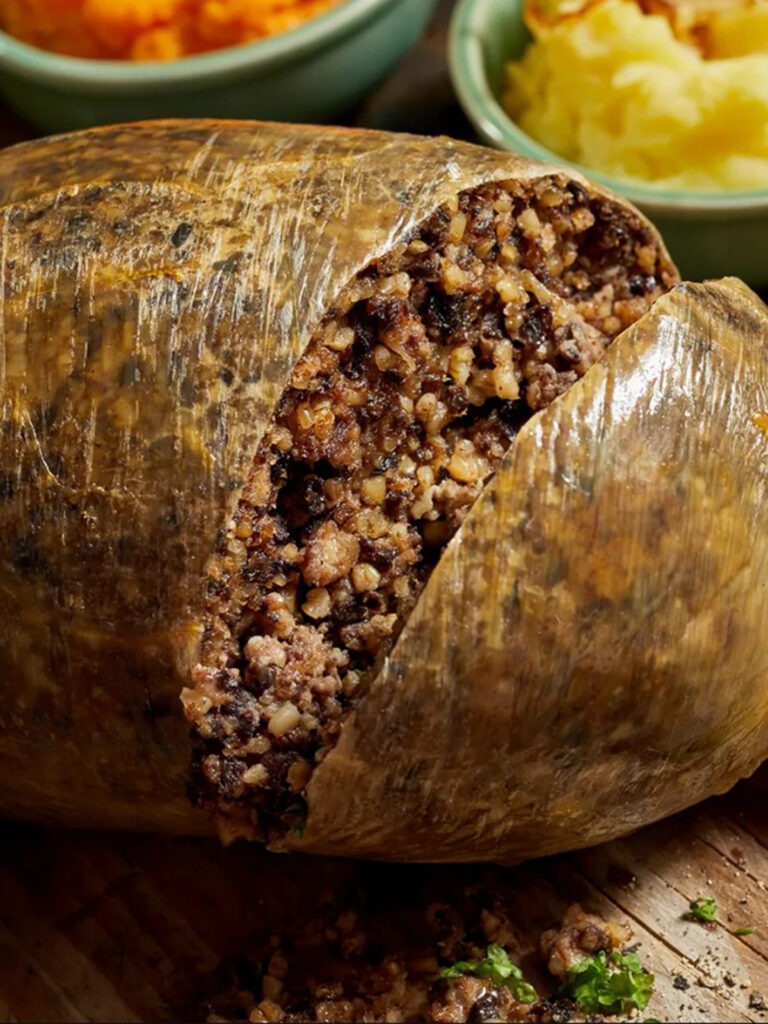

photo of Haggis from the website: https://www.britannica.com/topic/haggis
Oset – czyli thistle – narodowy symbol Szkocji, który występuje w herbach, na monetach, znaczkach pocztowych a nawet w architekturze. Jest on ważny dla Szkotów ze względu na legendę związaną z bitwą pod Largs z 1263 r. pomiędzy siłami szkockimi a wojskami norweskimi. Zgodnie z legendą oset uratował Szkotów przed nocnym atakiem wroga, ponieważ najeźdźcy, próbując zakradnąć się niezauważeni, nadepnęli na oset i ich krzyk zdradził ich obecność. Od tego czasu oset stanowi symbol odporności, siły, wytrwałości, ochrony przez złem oraz niezależności Szkocji.
The thistle is a national symbol of Scotland, appearing on coats of arms, coins, postage stamps, and even architecture. It is significant to the Scots due to a legend surrounding the Battle of Largs in 1263 between Scottish and Norwegian forces. According to legend, the thistle saved the Scots from a nighttime enemy attack because the invaders, trying to sneak in unnoticed, stepped on it, and its cry betrayed their presence. Since then, the thistle has been a symbol of resilience, strength, perseverance, protection from evil, and Scottish independence.
Kilt – narodowy strój szkocki. Jest to spódnica wykonana z tartanu, czyli materiału w kraciasty wzór. Każdy ze szkockich klanów posiada własny wzór tartanu. Kilt jest strojem odświętnym, zakładanym na specjalne okazje i uroczystości rodzinne. Tradycyjnie jest to strój męski choć dostępne są kobiece stroje wykonane z tartanu, oparte na tym wzorze.. Mężczyźni mogą dodatkowo do kiltu nosić sporran czyli skórzaną lub futrzaną torebkę przyczepioną do paska na biodrach (jak na zdjęciu).
Kilt – Scottish national costume. This is a skirt made of tartan, a material with a checkered pattern. Each Scottish clan has its own tartan pattern. The kilt is a ceremonial garment worn for holidays and family gatherings. Traditionally, it is a men’s garment, although women’s tartan costumes based on this pattern are also available. Men may also wear a sporran, a leather or fur pouch attached to a belt at the hips (as shown in the photo).
Dudziarz – muzyk grający na tradycyjnym szkockim instrumencie dętym czyli dudach, ubrany w tradycyjny szkocki strój
Bagpiper – a musician playing the traditional Scottish wind instrument, the bagpipes, dressed in traditional Scottish attire
Haggis – narodowa potrawa szkocka , tradycyjnie przygotowywana z owczych podrobów (wątroby, serca i płuc), wymieszanych z cebulą, mąką owsianą, tłuszczem i przyprawami, a następnie zaszytych i duszonych w owczym żołądku, chociaż współcześnie często używana jest sztuczna osłonka. Tradycyjnie haggis podaje się z neeps and tatties czyli brukwią i ziemniakami ugotowanymi i tłuczonymi oddzielnie, oraz z kieliszkiem szkockiej whisky, zwłaszcza jako danie główne kolacji Roberta Burnsa (narodowego wieszcza Szkocji z XVIII wieku), która ma miejsce co roku 25 stycznia.
Haggis – Scotland’s national dish, traditionally made from sheep’s offal (liver, heart, and lungs), mixed with onions, oatmeal, fat, and spices, then sewn and stewed in a sheep’s stomach, although nowadays an artificial casing is often used instead. Traditionally, haggis is served with neeps and tatties (swede and potatoes cooked and mashed separately), and a glass of Scotch whisky, especially as the main course of Robert Burns’s (Scotland’s 18th-century national bard) dinner, which takes place annually on 25th January.
Fish and chips – tradycyjna potrawa na Wyspach Brytyjskich czyli ryba (zwykle dorsz lub łupacz) z frytkami, również często serwowana w szkockich restauracjach
Fish and chips – a traditional dish in the British Isles, i.e. fish (usually cod or haddock) with chips, also often served in Scottish restaurants
QUIZ
Jak nazywa się coroczny uliczny festiwal teatralny odbywający się w sierpniu?
W którym wieku powstało opactwo Holyrood, które dało początek pałacowi pod tą samą nazwą?
Ile ulic stanowi cześć Royal Mile czyli historycznie najważniejszej ulicy w Edynburgu? Wymień choć dwie nazwy.
Jaka jest rzeczywista długość Royal Mile?
Co jest roślinnym symbolem Szkocji?
Z jakiego materiału wykonuje się kilt, czyli tradycyjną spódnicę szkocką?
Jak nazywa się najwyższy szczyt Parku Holyrood?
Kto był twórcą protestanckiego Kościoła Szkocji?
Ile wynosi przybliżona liczba ludności Edynburga?
W którym wieku założono Uniwersytet Edynburski?
Jak nazywa się tradycyjny szkocki instrument muzyczny?
Jaka ryba zazwyczaj wchodzi w skład tradycyjnej potrawy brytyjskiej czyli fish & chips?
Na czyją cześć nazwano dworzec kolejowy w Edynburgu „Waverley”?
1. What is the name of the annual street theatre festival held in August?
2. In what century was Holyrood Abbey founded, which gave rise to the palace of the same name?
3. How many streets make up the Royal Mile, historically the most important street in Edinburgh? Name at least two.
4. What is the actual length of the Royal Mile?
5. What is the plant symbol of Scotland?
6. What material is the kilt, the traditional Scottish skirt, made of?
7. What is the name of the highest peak in Holyrood Park?
8. Who founded the Protestant Church of Scotland?
9. What is the approximate population of Edinburgh?
10. In what century was the University of Edinburgh founded?
11. What is the name of the traditional Scottish musical instrument?
12. What fish is typically used in the traditional British dish of fish and chips?
13. In whose honour was Edinburgh Waverley Railway Station named?
Odpowiedzi:
The Fringe
XII w.
Zgodnie z niektórymi źródłami 4 ale w rzeczywistości 5 ulic tworzy Royal Mile np. Canongate, Abbey Strand
1807 m
Oset czyli thistle
Z tartanu
Arthur’s Seat
John Knox
Około 560 tys.
XVI w.
Dudy (bagpipes)
Dorsz lub łupacz
Waltera Scotta
Answers:
The Fringe
12th century
According to some sources, 4, but in reality 5 streets make up the Royal Mile, e.g. Canongate, Abbey Strand
1807 m
Thistle
Tartan
Arthur’s Seat
John Knox
Around 560,000
16th century
Bagpipes
Cod or haddock
Sir Walter Scott